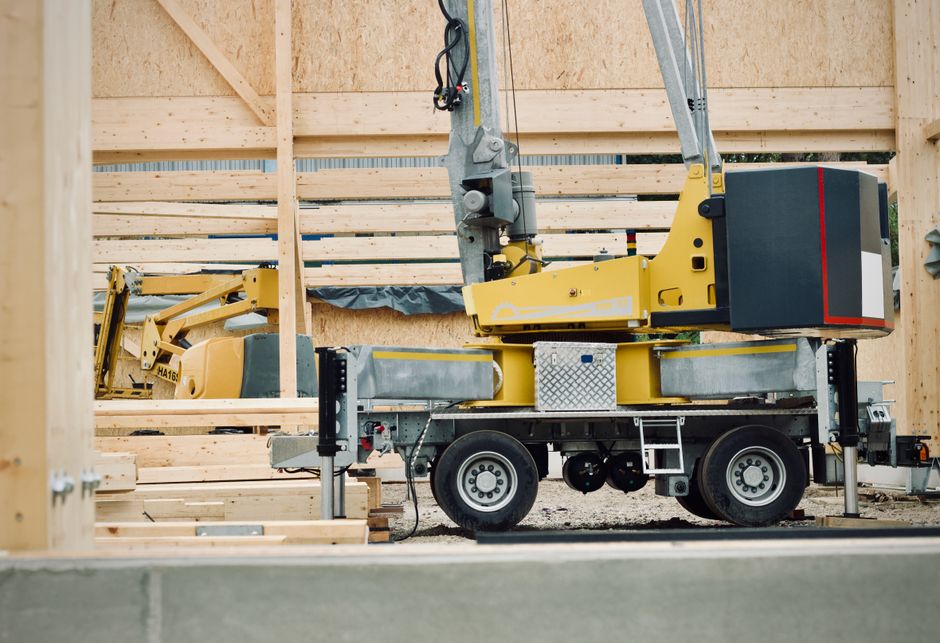
Inland marine vs commercial property insurance is a choice every contractor, photographer, and mobile professional hits the moment their tools leave the shop. Your commercial property policy covers gear sitting inside your office or warehouse. However, the second you load that equipment into a truck or set it up on a job site, commercial property protection drops to almost nothing.
That gap is exactly where inland marine steps in. Understanding the inland marine vs commercial property split helps you avoid paying for coverage that does not follow your tools where they actually go.
Inland Marine Vs Commercial Property: The Key Differences
The core inland marine vs commercial property difference comes down to one word: location. Commercial property covers your business personal property at your listed address. Inland marine covers property that moves. In most cases, a standard commercial property policy caps off-premises coverage at just 10% of your business personal property limit. For example, a $50,000 policy gives you only $5,000 of off-site protection — before your deductible.
Here is a side-by-side breakdown of how inland marine vs commercial property compare across the factors that matter most to a business owner.
| Factor | Commercial Property | Inland Marine |
|---|---|---|
| What it covers | Tools, equipment, inventory at your business address | Tools and equipment anywhere — job sites, transit, client locations |
| Off-premises coverage | Capped at 10% of your policy limit | Full coverage wherever the item goes |
| In-transit coverage | No | Yes — a core feature |
| Coverage type | Named perils (basic) or open perils (special form) | Open perils / all-risk on most policies |
| Typical annual cost | $750–$2,500/yr for a small business | $250–$1,500/yr depending on equipment value |
| Common deductible | $500–$5,000 (most pick $1,000) | $250–$5,000 per occurrence |
| Building / structure | Yes | No |
| Legally required? | No (but lenders and landlords may require it) | No (but many contracts require it) |
As a result, the inland marine vs commercial property question is not really “which one” — it is “do I need both?” Typically, the answer is yes if your work involves any travel.
When Each Option Is the Better Choice
Commercial property alone makes sense if every piece of equipment stays inside your building. A bookkeeper working from a home office, for example, may only need commercial property to cover a computer and printer. The gear never moves. There is no transit risk.
Inland marine becomes the better choice the moment tools leave your location. A general contractor hauling a $15,000 table saw to a remodel site needs inland marine. So does a photographer carrying $8,000 in cameras to a wedding venue. Without it, a theft from your truck at a job site could mean replacing everything out of pocket. Your commercial property policy would pay little or nothing for that loss.
Many trades need both policies working together. Your commercial property covers the shop. Inland marine covers everything that rolls out the door each morning. This inland marine vs commercial property pairing eliminates the gap that catches most small businesses off guard.
The Costs and Trade-Offs
Inland marine is often cheaper than owners expect. The median small-business inland marine premium runs about $350 to $576 per year. That works out to roughly $29 to $48 per month. Rates depend on the total value of insured equipment and how much it moves around.
| Trade / Profession | Typical Inland Marine Premium | Typical Equipment Value Insured |
|---|---|---|
| Handyperson | $252/yr ($21/mo) | $5,000–$15,000 |
| DJ / entertainer | $456/yr ($38/mo) | $10,000–$30,000 |
| Photographer | $519/yr ($43/mo) | $8,000–$25,000 |
| General contractor | $500–$1,500/yr | $25,000–$100,000 |
| IT consultant | $150–$1,200/yr | $5,000–$50,000 |
Commercial property insurance for a small business typically costs around $800 per year at the median, with many paying $750 to $2,500 depending on location and building value. In coastal states, you may also face separate wind or hurricane deductibles of 1% to 10% of insured value. That is on top of your standard deductible.
The trade-off with inland marine vs commercial property is straightforward. Commercial property gives you broader protection at your fixed location, including the building itself. Inland marine gives you narrow but deep protection for mobile equipment. Skipping inland marine to save $30 a month can mean eating a $10,000 tool theft with no reimbursement.
How This Varies by Trade and State
Neither inland marine nor commercial property is legally required by any state. However, your lender, landlord, or general contractor client may require one or both in your contract. In most cases, the inland marine vs commercial property decision depends more on your trade than your state. A plumber who works on-site every day has a bigger inland marine need than a consultant who rarely leaves the office.
State location does affect commercial property pricing, especially for natural disaster risk. Here is how the inland marine vs commercial property cost picture shifts across different states.
📨 Get Free Business Insurance Guides Alerts
Free · No spam · Unsubscribe anytime
| State | Commercial Property Impact | Inland Marine Impact |
|---|---|---|
| Florida | Hurricane deductible of 2%–10% of insured value; wind may be excluded from standard policy | Minimal state-specific impact; flood still excluded |
| Texas | Separate wind/hail deductible of 1%–5% in coastal counties | Standard rates; transit risk same as other states |
| California | Earthquake excluded; separate quake policy needed | Earthquake excluded here too; no special state rules |
| New York | Higher premiums in NYC metro; coastal wind deductibles apply on Long Island | Standard rates statewide |
Regardless of your state, confirm exact requirements and current rates with a licensed insurance agent before buying either policy.
Frequently Asked Questions
Does my commercial property policy cover tools stolen from my work truck?
In most cases, no. Standard commercial property policies exclude property in transit. Even the off-premises extension caps coverage at 10% of your business personal property limit. For example, if your BPP limit is $50,000, you would get at most $5,000 — minus your deductible. Inland marine is designed for exactly this scenario.
Can I buy inland marine without commercial property insurance?
Yes. If you work entirely out of a vehicle and have no fixed business location, inland marine alone may cover your equipment needs. However, many insurers bundle inland marine with a Business Owner’s Policy (BOP) that includes commercial property. Bundling typically costs less than buying each policy separately.
Does inland marine cover employee theft of tools?
Typically, no. Employee dishonesty is excluded from most inland marine policies. You would need a separate crime or fidelity bond to cover theft by an employee. Inland marine does cover theft by third parties — for example, someone stealing tools from your truck at a job site overnight.
Compare Quotes for Your Business
What you pay depends on your trade, your state, your revenue, and your claims history. The only way to know your real price is to compare several quotes side by side.
Find Your State’s Insurance Rules →
Sources & How to Verify
The information on this page is drawn from official government and industry sources. Insurance requirements, premiums, and state rules change, so always confirm the exact figure with your state, a licensed agent, or the authority source.
- U.S. Small Business Administration: sba.gov — federal small-business insurance guidance
- Insurance Information Institute: iii.org — neutral premium and coverage data
- NAIC: naic.org — state insurance regulation data
- U.S. Department of Labor: dol.gov — workers’ compensation overview
- Your state DOI, workers’ comp board, and contractor-licensing board: search “[your state] department of insurance” or “[your state] workers comp” for the exact law and forms
Content last reviewed June 2026. If you notice outdated information, please contact us.
Related Guides
- Business Insurance by State (All 51 Jurisdictions)
- More in This Category
- Insurance by Profession
- Coverage Types Explained
- Comparison Guides
- Business Insurance Glossary
Informational only — not insurance, legal, or tax advice. Business Insure Guide is an independent educational resource, not an insurance company, broker, law firm, or tax advisor, and this page does not provide insurance, legal, or tax advice. Requirements, premiums, and rules vary by trade, state, and insurer, and change over time. Always confirm the exact coverage, requirement, and price with a licensed insurance agent and your state before you buy. Verify with a licensed professional for advice about your specific situation.